This year, the Middle Colorado Watershed Council‘s Wild & Scenic Film Festival On Tour Events take place at two iconic venues: the Ute Theater in Rifle on October 24 and the Vaudeville Theater in Glenwood Springs on October 29. Come be part of an evening that uplifts the outdoors, energizes the community, and helps advance conservation across the region with great food and drinks, door prizes, and auctions featuring more than $4,500 in donated items from local businesses and supporters
Festivalgoers can expect a fun, inspiring night built around ten carefully curated short films exploring water, wildlife, wildfire resilience, conservation, adventure, and our connection to the natural world. It’s a wonderful community gathering that also supports watershed restoration, education and stewardship in western Colorado.
MCWC didn’t start as an institution — it started as a conversation. Sixteen years later, it’s a functioning organization with staff, funding, and a growing body of completed work. In 2009, twenty-six people representing 23 organizations were brought together by the Colorado River District, Colorado State University Extension, Colorado Watershed Assembly, and the Sonoran Institute to explore collaboration opportunities in the Middle Colorado River watershed. The next year, volunteers from the initial stakeholder group formed a Steering Committee to set the work plan and direction. The group identified key issues, potential activities, and the stakeholders needed for long-term impact.
Later, the Colorado Department of Public Health and Environment Nonpoint Source Program awarded a Section 319 watershed planning grant to fund data assessment and planning efforts. A Leadership Committee developed the Project Implementation Plan, and the grant was officially awarded in December 2012. MCWC hired its first executive director to oversee the completion of a Watershed Assessment and Watershed Plan.
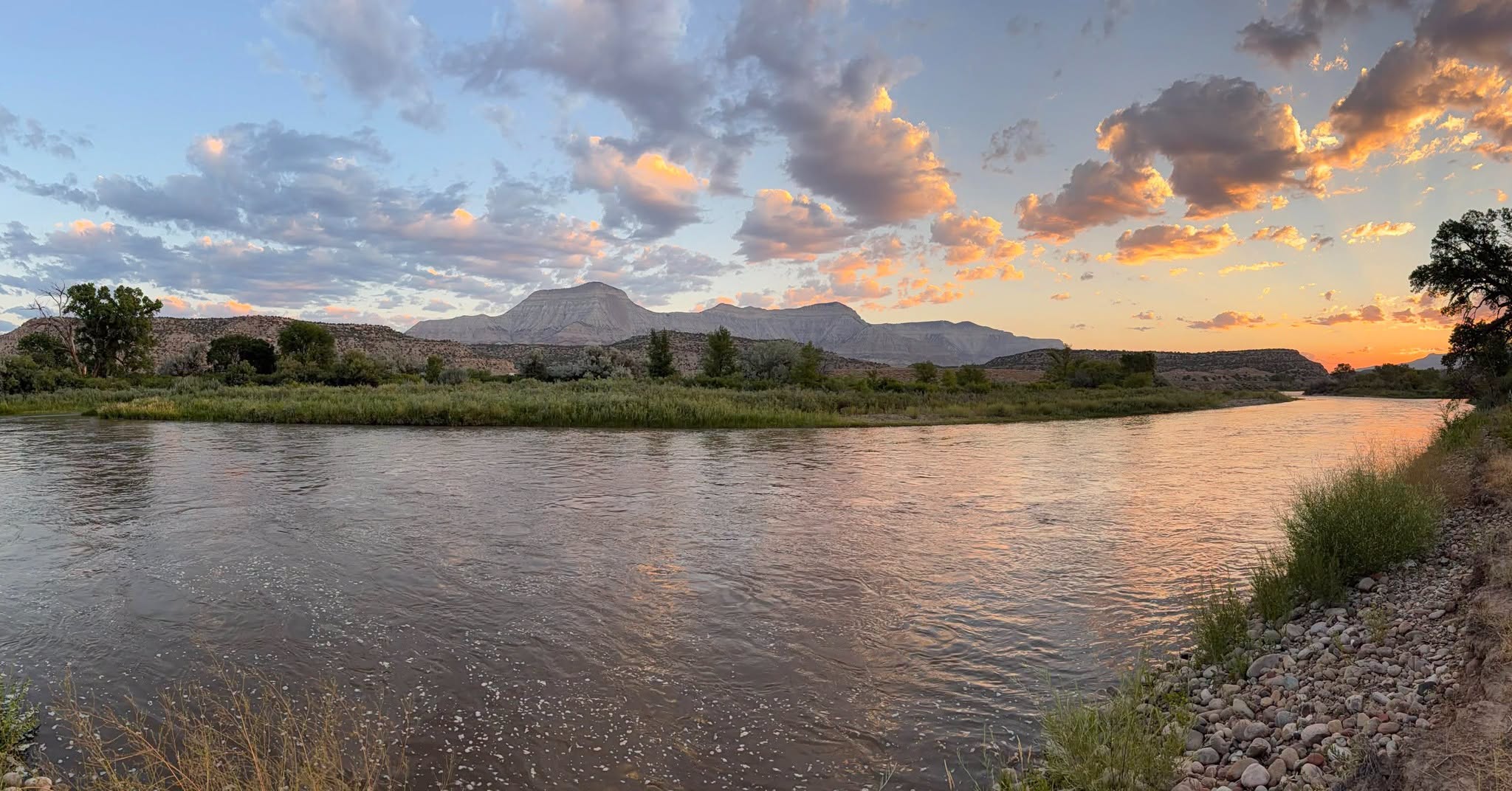
MCWC’s work falls into four interconnected focus areas: Wildfire resilience, water quality and quantity, aquatic and riparian habitat, and river recreation.
Through the Colorado River Wildfire Collaborative, MCWC brings together 40+ agencies, fire districts, municipalities and landowners to plan and execute fuels reduction, community preparedness, and post-fire recovery work across Garfield and Mesa Counties. MCWC monitors water quality through sensor networks and citizen science programs, supports agricultural infrastructure upgrades that improve efficiency and reduce waste, and supports coordinated flow management that keeps water available as the region grows and the climate shifts.
Additionally, MCWC removes barriers to fish passage, controls invasive species like tamarisk and Russian olive, and restores the channels and riparian corridors that native fish and wildlife have depended on for thousands of years. Finally, MCWC improves launch facilities, expands trail connections between communities, and participates in the flow management decisions that shape the river experience for everyone who uses it.
 Kate Collins, Executive Director of the Middle Colorado Watershed Council, says, “Wild & Scenic is the Middle Colorado Watershed Council’s largest annual fundraiser, so it provides important unrestricted support for our work across a 2,200-square-mile watershed and 75 miles of the Colorado River. Just as importantly, the festival gives us a way to connect with people who may not come to a watershed meeting or restoration project, but who care deeply about rivers, wildlife, wildfire resilience, and wild places. The films open the door to those conversations in an accessible and inspiring way.”
Kate’s favorite thing about putting on this event is, “the sense of community. After 12 years, Wild & Scenic has become a tradition for us, and there’s something special about seeing longtime supporters, new faces, local businesses and community partners all together in the same room. The films take us all over the world, but again and again, we find ourselves talking afterward about how those stories connect to our own watershed and the places we love here in western Colorado.”